
Tiny Warriors Rush - Idle TD
SayGames LtdStrategy
4.0594.00 Reviews
- Version
- 1.15.0
- Installs
- 1.00M
- Age Rating
- Everyone 10+
Screenshots
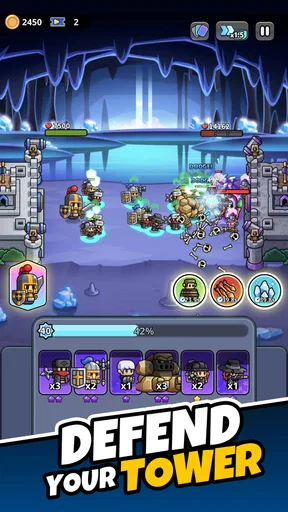
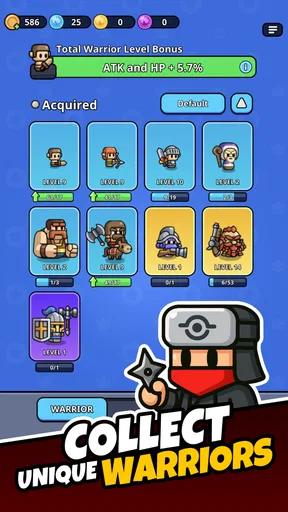
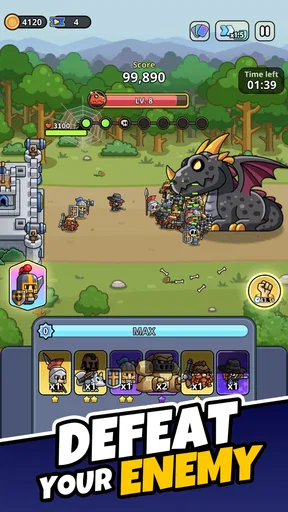
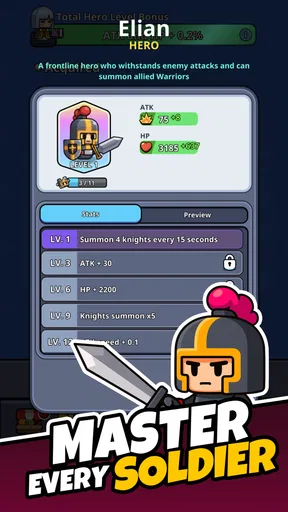
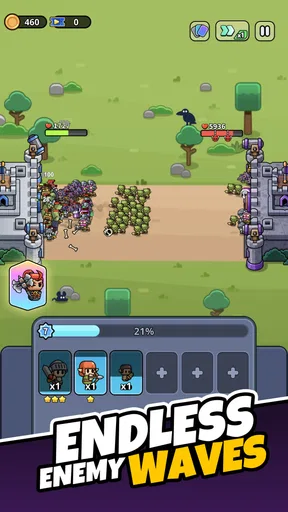

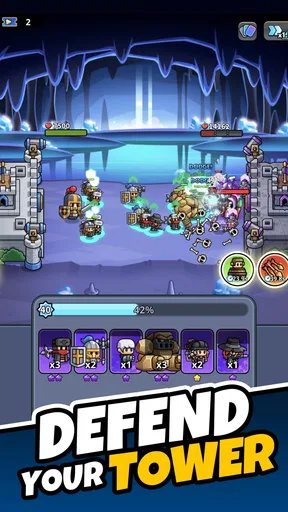
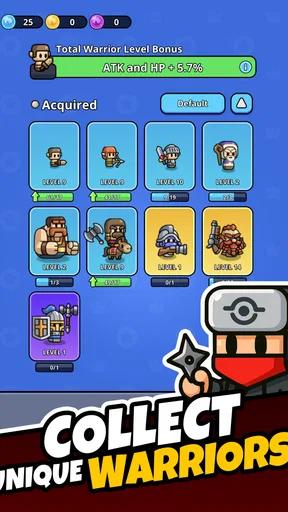
Our Review of Tiny Warriors Rush - Idle TD
 Analysis by Appyee
I spent time with Tiny Warriors Rush - Idle TD as the kind of player who enjoys strategy games but does not always have a long, uninterrupted session available. Its basic idea is easy to understand: protect a castle while small enemy forces arrive in waves, then use the idle structure to keep progress moving between active visits. That sounds simple, but the real question is whether the game gives you enough meaningful decisions to stay interesting after the first few rounds.
My short answer is that it works best as a light, low-pressure tower defense game for quick sessions. It is free to start, aimed at players aged 10 and up, and made by SayGames Ltd. The game has reached over one million installs and holds a 4.0 average from around sixteen thousand ratings, which matches my impression: it is approachable and entertaining, although not deep enough for every strategy fan.
What I looked for before recommending it
When I judge an idle tower defense game, I do not look only at whether the first battle is fun. I want to know how much attention it demands, whether upgrades create real choices, how clearly it communicates failure, and whether returning after a break feels rewarding rather than confusing. I also pay attention to how quickly the game turns from a strategy exercise into a routine of tapping through upgrades.
That distinction matters here. Tiny Warriors Rush is not trying to compete with a large, long-form strategy game that expects careful map planning, extensive unit combinations, or a campaign that occupies an evening. Its appeal is closer to a compact mobile break: open the game, check the castle, improve your defenses, watch the next wave, and leave when you have had enough.
I found the most useful decision criterion to be tolerance for repetition. If you enjoy seeing a defense gradually become stronger and like the satisfaction of collecting progress while away, the idle format is a good fit. If you need every wave to introduce a fresh tactical puzzle, the familiar cycle may feel thin sooner than you would like.
How the core loop feels in ordinary use
The central rhythm is straightforward. Enemy waves put pressure on the castle, and your job is to improve the defensive setup so later attacks become manageable. The idle element means the game is designed around returning regularly rather than demanding constant control. I could treat it as a short check-in instead of a game that required my full attention from beginning to end.
A realistic use case is a commute or a lunch break. I would open it for a few minutes, review the progress that had accumulated, spend improvements where they seemed most useful, and start another stretch of defense. That makes it more convenient than a traditional tower defense title when I only have one hand free or do not want to commit to a long level.
The trade-off is that convenience reduces urgency. A traditional tower defense game often makes me study enemy paths, choose exact placement points, and react to a sudden change in the battlefield. Here, the pleasure comes more from gradual optimization: deciding what to strengthen first and watching the castle survive attacks that previously overwhelmed it.
Why the idle design is more important than it first appears
The idle structure changes how I think about mistakes. In a fully active defense game, a poor decision can ruin a run immediately. In this format, a weak upgrade choice usually feels like a delay rather than a complete disaster. That makes the game friendlier to newcomers and useful for casual play, but it also means the consequences are less dramatic.
One practical habit helped me get more from it: I avoided spending every improvement as soon as it appeared. I first considered whether my current problem was surviving the opening of a wave or dealing with pressure later on. Saving enough progress to make a noticeable defensive improvement gave me a clearer sense of direction than tapping upgrades randomly.
Another useful approach is to use active sessions for diagnosis rather than simply collecting progress. When a wave goes badly, I pay attention to when the defense begins to struggle. If the problem appears early, general strength may matter more than chasing a narrow improvement. If the castle holds for a while and then collapses, I reassess whether I have been investing too heavily in the wrong part of the defense.
These are not complicated tactics, but they prevent the idle system from becoming completely automatic. The game rewards a little observation, even though it does not require the intense concentration of a more demanding strategy title.
Where Tiny Warriors Rush works especially well
The strongest part of the experience is its accessibility. I did not need a long explanation before understanding the objective, and the small-scale presentation makes it easy to see what the game wants me to do. This is valuable for someone who likes strategy in principle but is put off by crowded interfaces, large technology trees, or lengthy tutorials.
It is also a good choice for players who prefer progress that continues across short visits. I could leave after a brief session without feeling that I had abandoned a complicated plan. When I returned, the game still made sense as a simple question: what should I improve now so the castle can handle more pressure?
The real strength is its low commitment, not tactical complexity. That is the point I would emphasize to a friend. It fits the space between a puzzle and a full strategy campaign. You get the pleasure of strengthening a defense and watching waves become less threatening, but you do not have to reserve a large block of time for every play session.
Small decisions that make the experience better
I recommend resisting the temptation to judge an upgrade only by its immediate visual effect. In an idle game, a modest improvement that keeps the defense stable can be more valuable than a flashy choice that leaves the rest of the setup weak. I found it more satisfying to build a reliable base first, then pursue improvements that helped push beyond the current limit.
I also treated failed progress as information. Instead of restarting my approach completely, I asked which stage of the wave exposed the weakness. That made each return more purposeful. It is a simple workflow, but it turns the game from passive tapping into a small optimization exercise.
A third tip is to avoid opening the game only when you expect a long session. Its design is better suited to frequent, modest check-ins. A person who plays for a few minutes several times during the day may enjoy the idle rhythm more than someone who expects a substantial strategy session every time they launch it.
For younger players within the stated age range, the uncomplicated objective may be easier to follow than a strategy game with many interacting systems. For adults, the same simplicity can be relaxing after work. The best audience is someone who values clarity and steady progress over a large amount of content to master.
Presentation and ease of entry
The game’s identity comes from the contrast between a castle under attack and tiny warriors arriving in repeated waves. That gives the experience a playful tone rather than a grim or highly technical one. I found it easier to pick up casually because the theme does not ask me to memorize a large fictional world before I can enjoy the mechanics.
It is currently free, which removes the biggest barrier to trying it. However, free entry does not mean the entire experience is free of pressure. In-app purchases range from $0.49 to $99.99 per item, so I would approach spending carefully and decide in advance whether I am comfortable making optional purchases. A player who wants a completely uninterrupted free experience should pay attention to how the game presents its purchase options during normal play.
The current version is 1.15.0, and the game runs on devices using Android 8.0 or later. That makes it accessible to many players with older compatible phones, although actual smoothness will still depend on the device. I would check the operating-system requirement before installing, especially if the phone is several years old.
Where a different strategy game may fit better
The main limitation is depth. Tiny Warriors Rush gives me a pleasant defensive routine, but it does not replace a traditional tower defense game when I want intricate positioning, multiple routes, or a campaign built around carefully planned encounters. Those alternatives are a better choice for players who enjoy studying enemy patterns and solving each level as a distinct tactical problem.
It may also disappoint players who dislike idle progression on principle. If you want every improvement to come from direct skill and every victory to depend on your moment-to-moment choices, the passive side of this game can feel too influential. A more hands-on tower defense title will usually provide a stronger sense of personal control.
On the other hand, some idle games focus almost entirely on watching numbers rise. Tiny Warriors Rush is more appealing than that narrow format because the castle-defense theme gives the progress a visible purpose. Still, anyone seeking a deep management simulation should look elsewhere. The game is not the right substitute for a strategy experience built around economy, diplomacy, large-scale planning, or a long-term campaign.
Who should skip it
I would skip this game if my main reason for playing strategy titles were complex decision trees. The accessible structure is also its ceiling. Once I understand the basic rhythm, the challenge depends heavily on improving the defense and waiting for the next opportunity rather than constantly learning new systems.
I would also be cautious if I were particularly sensitive to repeated wave patterns or monetization prompts. The free model is convenient, but the presence of purchases means the experience is not designed like a single upfront premium game. Players who prefer to pay once and remove all commercial friction may be happier with a premium alternative, even if that alternative offers fewer idle conveniences.
Finally, it is not ideal for someone who wants a story-rich game. The castle and warriors provide a clear setting, but the attraction is the defensive loop, not character development or narrative discovery. Choosing it for a story would create the wrong expectations from the start.
What switching to an alternative would involve
Moving from this game to a conventional tower defense title usually means exchanging convenience for control. I would expect to spend more time learning maps, placing defenses precisely, and planning around individual enemy types. That can be rewarding, but it also makes the game less suitable for quick breaks.
Switching to a more passive idle game would make sessions even easier, but I might lose the sense that I am protecting a specific objective. The castle gives Tiny Warriors Rush a useful middle ground: there is enough structure to make upgrades feel connected to survival, while the idle format keeps the commitment small.
The cost of switching is therefore mostly about changing habits rather than learning a completely different genre. If I already enjoy short mobile sessions, this game asks very little adjustment. If I am coming from a demanding strategy title, I need to accept that the reward is relaxation and gradual progress rather than detailed tactical mastery.
Before spending money, I would play long enough to decide whether the repeated defense loop remains enjoyable. Because the game is free to begin, there is little reason to purchase immediately. I would first learn whether I like checking the castle, choosing improvements, and returning after a break. That is more important than any single boost because the entire experience is built around that routine.
My recommendation after playing
I recommend Tiny Warriors Rush - Idle TD to casual strategy players who want a free, easy-to-enter castle defense game that fits around everyday life. It is especially suitable for short sessions, relaxed progression, and players who enjoy making small improvement decisions without managing a complicated battlefield.
I would not recommend it as a replacement for a deep tower defense campaign. If the best part of the genre for you is exact placement, difficult map puzzles, and constant tactical reaction, a more traditional alternative will probably hold your attention longer. If you dislike idle mechanics or do not want to navigate optional purchases, a premium strategy game may also be a better match.
For everyone else, the decision is fairly clear. Try it for free, keep your early upgrades deliberate, and judge it by whether the castle-defense routine feels satisfying after several short visits. Its 4.0 average and broad install base suggest a solid casual appeal, but my own recommendation comes with the same qualification: choose it for convenient, gradual strategy rather than deep tactical challenge.
SayGames Ltd has made a game that understands the value of a quick mobile session. I enjoyed it most when I treated each visit as a small planning exercise instead of expecting a full strategy campaign. With that expectation in place, it is an enjoyable option for Android players who meet the operating-system requirement and want a light defense game that can be picked up and put down without much ceremony.
Verdict
Strengths of Tiny Warriors Rush - Idle TD
- Simple idle mechanics make it easy to play in short sessions.
- Automatic battles let progress continue with minimal input.
- A wide variety of warriors adds team-building flexibility.
- Quick upgrade loops provide frequent rewards and progression.
- Colorful visuals and clear menus suit casual mobile players.
Limitations of Tiny Warriors Rush - Idle TD
- Progress can feel repetitive after extended play sessions.
- Higher stages may encourage frequent grinding for upgrades.
- Idle rewards are limited unless the game is opened regularly.
- Some upgrades and boosts may be tied to in-app purchases.
- The small-scale battles offer limited strategic depth for veterans.
Other Releases by SayGames Ltd
View All
Turbo Stars - Rival Racing
Racing4.6

Johnny Trigger: Action Shooter
Action4.6

DOP 4: Draw One Part
Puzzle4.4

DOP: Draw One Part
Puzzle4.4
Similar Picks in This Category
View All
Clash of Clans
Supercell4.5

Plants vs. Zombies™
ELECTRONIC ARTS3.7

Lords Mobile: Kingdom Wars
IGG.COM4.5

Clash Royale
Supercell4.4

State.io — Conquer the World
CASUAL AZUR GAMES4.1

Car Driving School : Car Games
Spark Game Studios3.9
Frequently Asked Questions
What is Tiny Warriors Rush - Idle TD?
Tiny Warriors Rush - Idle TD is a casual tower defense game focused on building and upgrading a team of small warriors. You defend against successive enemy waves, improve your units, unlock stronger abilities, and progress even when you are not actively playing. Its idle mechanics make it suitable for short sessions, while strategic placement and upgrade choices still influence how efficiently you clear stages.
How does the idle progression system work?
The game continues to generate rewards through its idle system, allowing your warriors to collect resources or make progress while you are away. When you return, you can claim those rewards and use them to upgrade characters, equipment, or defensive capabilities. However, active play is still useful because completing stages, missions, and challenges generally provides faster progress than relying only on offline earnings.
Is Tiny Warriors Rush - Idle TD free to download and play?
Tiny Warriors Rush - Idle TD can generally be downloaded and played without an upfront purchase, but the experience may include optional in-app purchases. These can offer extra resources, faster upgrades, special bundles, or other convenience features. Depending on the version and device, advertisements may also appear. You should review the store listing and payment settings before downloading, especially if children use the device.
Does the game require an internet connection?
An internet connection may be needed for certain features, including advertisements, cloud-related services, event content, account synchronization, or in-app purchases. Basic gameplay and some idle mechanics may work temporarily offline, but this can vary by version and platform. For the most reliable experience, launch the game while connected and check whether your progress has synchronized before switching to offline play.
Is Tiny Warriors Rush - Idle TD suitable for casual players?
The game is designed to be approachable for casual players because automated combat and idle rewards reduce the need for constant attention. You can make progress through short play sessions by collecting resources and improving your team. Nevertheless, later stages may require more deliberate upgrade decisions, since investing in the wrong warriors or abilities can slow progression and make difficult enemy waves harder to overcome.
Play our best games!


